AI Paralegal: Which Paralegal Work an AI Agent Can Take On
A task-by-task map of the paralegal work an AI agent can draft or run, what a person still has to own, and how to put one to work without creating new risk.
An “AI paralegal” is what vendors and firms call software that does part of a paralegal’s job: gathering and organizing documents, drafting first versions, summarizing records, filling forms and chasing deadlines. None of it is a paralegal. It is a tool, or an agent built from tools, whose output a lawyer or paralegal still checks and answers for.
This guide is for the people deciding what to hand it: managing partners, legal operations leads, and paralegals whose work is changing. It goes task by task, says what an agent can do and what stays with a person, and links to the deeper pieces on this site for each one.
The task map: what an AI paralegal can do, and what a person keeps
Most paralegal work splits cleanly into a part that is gathering, sorting and drafting, which an agent can take on, and a part that is judgment, which cannot be delegated to software.
| Task | What an agent can do | What a person keeps |
|---|---|---|
| Client intake and conflict checks Read more | Capture intake details, search the firm’s records for name variants and related entities, and flag possible matches. | Decide whether a conflict exists and whether to take the matter. |
| Document collection and organization | Index, rename and de-duplicate files, tag them by date, party and issue, and build exhibit and production lists. | Confirm the set is complete and make every privilege call. |
| Contract review Read more | Extract key clauses, compare them with the firm’s or client’s playbook, and flag deviations for review. | Set negotiating positions and sign off on the redline. |
| Chronologies, case summaries and briefs Read more | Draft timelines and summaries from the record, with each entry pointing back to its source document. | Check each entry against the source before anyone relies on it. |
| Deposition and hearing preparation Read more | Draft witness summaries, outlines and exhibit lists from transcripts and documents. | Choose the strategy, the questions and what goes in front of the witness. |
| Legal research and cite-checking Read more | Retrieve candidate authority from the firm’s sources and check citation form. | Read and verify every authority cited; never file a citation no one has read. |
| Routine drafting | Fill templates for letters, notices, and standard discovery requests and responses. | Review before anything is sent, served or signed. |
| Deadlines and docketing Read more | Propose dates from court rules and orders and draft calendar entries. | Confirm every docketed deadline. Fixed date rules are often better run by rule-based automation than by an agent. |
| Billing narratives Read more | Draft time-entry narratives from the work as it happens. | The timekeeper confirms the time and the description. |
What people mean by “AI paralegal”
The phrase covers three different things, and it helps to know which one is on offer:
- An assistant inside a tool you already use: a chat panel in a document system or practice management product that answers questions and drafts on request. It does one step at a time, when asked.
- A feature built for one task: contract clause extraction, deposition summaries, intake forms. Narrow, and usually the easiest to evaluate.
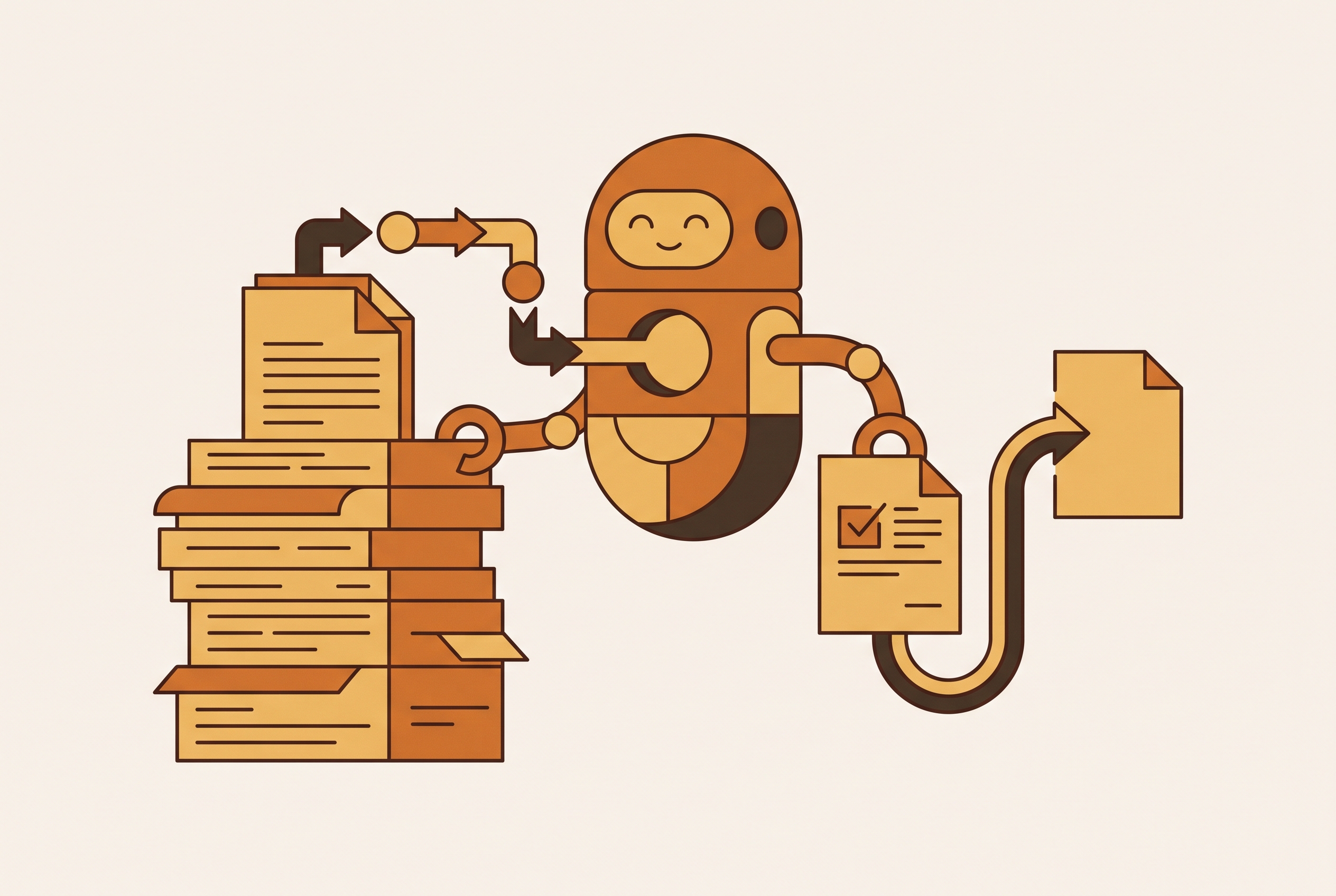
- An agent that runs a workflow: it takes a matter through several steps (collect, sort, draft, route for review) and stops at the points where a person has to decide. This is the closest to what a paralegal does, and the one that needs the most design.
The difference between the last two, and when plain rules beat an agent, is covered in AI agents vs rule-based automation in legal operations.
What stays with a person
An agent can draft almost anything a paralegal drafts. What it cannot do is be responsible for it. The parts of the job that stay with people are the ones where someone has to answer for a decision:
- Privilege and confidentiality calls, and what gets produced.
- Anything that amounts to legal advice to a client, which the rules on the unauthorized practice of law reserve to lawyers.
- Signing, filing and serving documents.
- Checking that every citation is real and says what the draft claims. Courts have sanctioned lawyers for filing briefs with citations an AI tool invented.
- Deciding when the agent is wrong, and fixing the process so it is not wrong the same way again.
Who carries the risk when an AI-assisted document goes wrong is covered in AI liability and malpractice risk in law firm AI deployments.
Supervision and the ethics rules
Lawyers already supervise paralegals under ABA Model Rule 5.3, which makes them responsible for the conduct of the nonlawyers who assist them. The ABA’s Formal Opinion 512 (July 29, 2024) applies the same thinking to generative AI tools. It walks through the duties of competence (Rule 1.1), confidentiality (Rule 1.6), communication with clients (Rule 1.4), reasonable fees (Rule 1.5), meritorious claims and candor toward the tribunal (Rules 3.1 and 3.3), and supervision (Rules 5.1 and 5.3).
In practice that means an AI paralegal needs the same things a new paralegal does: written instructions, a person who reviews its work, and limits on what it can see and send. The rules a firm answers to are its own state’s, and many state bars have published their own AI guidance, so check your jurisdiction’s before you rely on the ABA opinion alone.
Client data is the other half. Before any matter documents go into a tool, the firm needs to know where they are stored, who can see them and whether they are used to train a model. Legal AI data privacy and client confidentiality compliance goes through what to check.
Does an AI paralegal replace paralegals?
It changes the job more than it removes it. When an agent drafts the chronology, someone still has to know the record well enough to catch what it got wrong. When it sorts a production, someone still has to make the privilege calls. That someone is usually the paralegal, who moves from producing the first draft to setting up, checking and correcting the agent’s work, and handling the exceptions it routes to them.
The firms that get this right start with internal work, where a mistake is caught before a client or court sees it. Legal workflows worth automating before client-facing ones explains why that order matters.
How to put an AI paralegal to work
Start with one workflow, not a platform. A good first workflow has clear inputs and outputs, happens often, and has an obvious point where a person reviews the result.
- Write down the current steps. What a paralegal actually does today, including the checks they make without thinking about them. That list becomes the agent’s instructions and the reviewer’s checklist.
- Decide where the review gate sits. Name the person who approves the output and what they check before it moves on.
- Run it beside the people first. Have the agent do the work in parallel with the paralegal for a set period and compare the results, error by error.
- Check the data it needs. An agent is only as good as the documents and records it can reach; see law firm data infrastructure requirements for AI agents.
- Decide buy or build per workflow. A product may fit intake and not fit litigation support; see the platform vs custom agent build decision framework.
Moving from a trial to daily use has its own decisions about ownership and oversight, covered in getting a legal AI agent from pilot to production. If you are not sure the firm is ready at all, start with an AI operations audit.
Questions to ask before buying an AI paralegal product
Vendors describe these products in similar words, so ask the same questions of each and get the answers in writing:
- Where is client data stored, how long is it kept, and is it used to train any model?
- Does every summary and draft point back to the document and page it came from?
- Can you export a log of what the tool did on each matter, and who approved it?
- Does it connect to your practice management and document systems, or does work have to be copied in and out? See Clio and practice management AI integration limits.
- What happens to your workflows when the vendor changes the model underneath? See switching legal AI models in production.
- How is it priced (per user, per matter, per document)? Prices change often; check the vendor’s current pricing page or ask for a written quote.
- How will you test it? Run it on a closed matter where you know the right answers, using the checks in AI evaluation frameworks for legal AI output quality.
Questions people ask
Is it allowed to use an AI paralegal?
Nothing in the ABA Model Rules forbids it. ABA Formal Opinion 512 says a lawyer using generative AI tools must meet the existing duties of competence, confidentiality, communication, reasonable fees and supervision. Your state’s rules and bar guidance are the ones that apply to you, so check them.
Can an AI paralegal file documents or give legal advice?
No. It can draft documents and prepare filings, but a person signs, files and serves them, and advice to a client comes from a lawyer.
Can a firm bill clients for AI paralegal work?
ABA Formal Opinion 512 discusses fees for AI-assisted work under Rule 1.5: a lawyer billing by the hour should bill for the time actually spent, and generally should not charge a client for time spent learning a tool the lawyer will use across their practice. Check your jurisdiction’s guidance and your engagement letters.
What is the best paralegal work to automate first?
Internal, repetitive work with a clear review point: document organization, chronologies, intake and billing narratives. Leave anything a client or court sees directly until the firm has a review process that works.