Essay Legal AI Platforms
Switching Legal AI Models in Production Without Disrupting Workflows
Decoupling models from workflows lets legal teams switch AI systems without operational collapse.
Switching legal AI models in production requires operational engineering. Continuity depends on separating the model from the knowledge, tools, and workflows around it before a replacement becomes necessary. A survivable migration then proceeds in layers, validating each workflow while preserving the ability to return to the outgoing model.
Why legal AI model switches are now operational emergencies, not procurement decisions
Legal AI is now part of daily production workflows. Corporate legal AI adoption more than doubled in a single year, while agentic systems such as Thomson Reuters’ CoCounsel and LexisNexis’ Lexis+ with Protégé execute multi-step workflows autonomously. Their users are not only attorneys and paralegals. Procurement, finance, and sales teams also depend on processes that run through legal platforms.
The trigger may also leave little time. Equinix notes that a provider can suffer outages or become unavailable because of regulatory restrictions or compliance requirements. Portability is consequently a business continuity requirement, rather than an option reserved for the next contract renewal. The EU AI Act, applying to high-risk legal AI systems from December 2027, adds a compliance dimension to that requirement. An organization migrating with incomplete audit trails and undefined model governance faces exposure beyond interrupted work.
Why integration depth — not contract length — is what actually traps organizations
Integration depth begins with the knowledge embedded in the platform. Precedent libraries, clause preferences, negotiation playbooks, and internal taxonomy structures shape how legal AI responds to an organization’s work. That institutional intelligence does not transfer automatically to a replacement model. ContractPodAi, Luminance, and Evisort use proprietary AI models and internal taxonomies, while also offering open APIs and pre-built connectors for data interoperability. Those interfaces support data movement, but they do not make a new platform inherit months of work establishing preferred risk tolerances.
The dependency extends beyond training and configuration. By 2025, leading deployments had embedded AI into matter intake, document review queues, billing narrative generation, contract redlining, and compliance monitoring. These are processes built around a system’s behavior throughout a workflow. Where a CLM platform connects to Salesforce CPQ or SAP Ariba, replacing it becomes a multi-departmental re-engineering project. Legal operations cannot treat those connections as its decision alone.
Compatible APIs do not remove the surrounding dependencies. Equinix identifies retrieval indexes, access policies, live data tools, and network connections as components with their own switching requirements. Each must work with the replacement even when the application can already send requests to its endpoint. Contract length determines when an agreement ends. Integration depth determines how much work the organization must do before it can leave.
The five cost categories that migration analyses routinely omit
When a mid-sized law firm or Fortune 500 legal department first weighs a purchase, its procurement analyses rarely show the full cost of migration. The omission can change the eventual switching decision. A useful total cost of ownership model therefore separates the work of moving information, restoring performance, adapting people and processes, and recovering assets covered by restrictive terms.
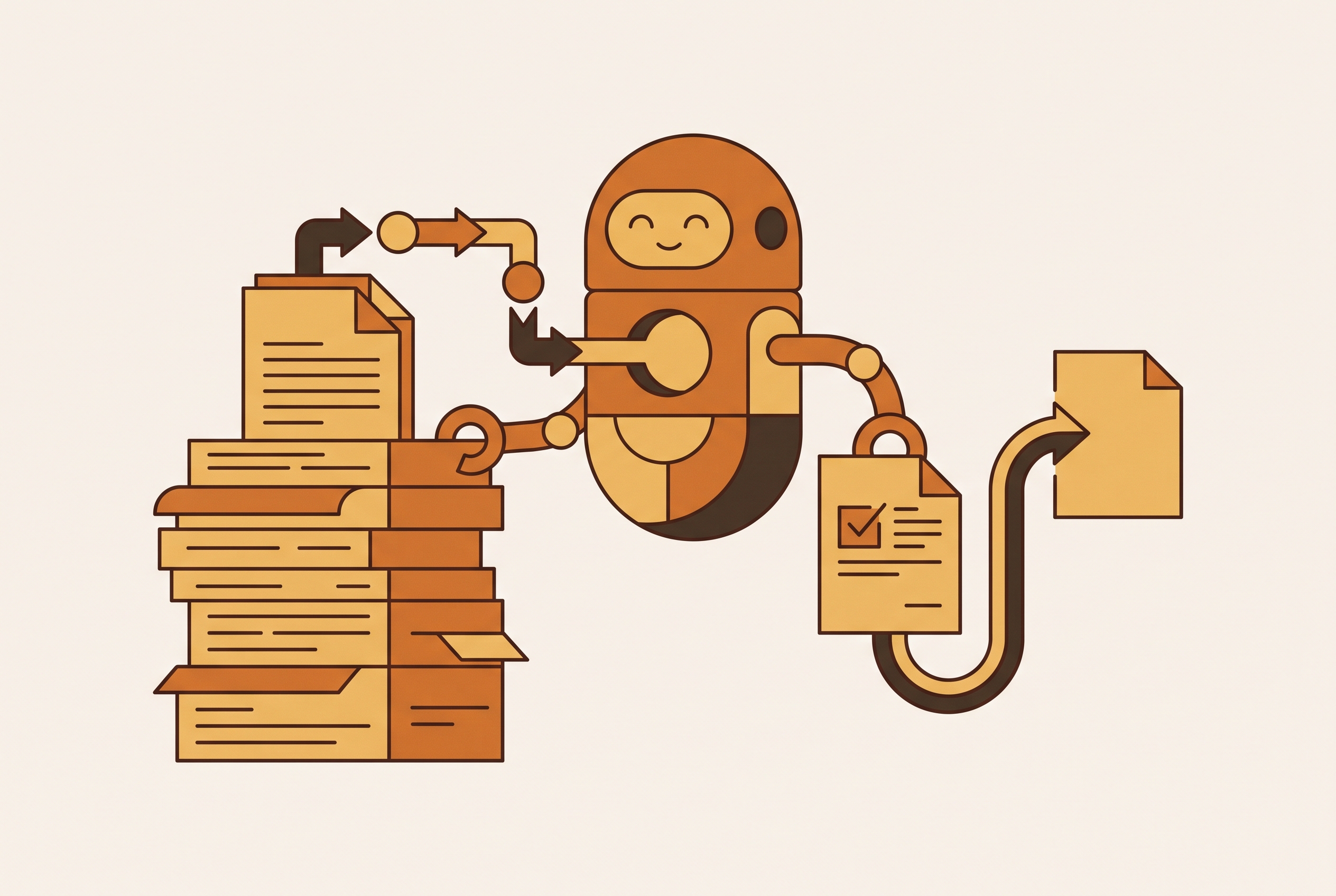
Data migration friction covers the work of extraction, schema mapping, re-ingestion, and quality assurance for the firm-specific training data. Moving the records is only part of it. The budget must also account for rebuilding model performance when institutional AI training is lost, which can take many months.
Retraining reaches well beyond the technology team. Attorneys, paralegals, and business professionals who have embedded the tool in daily work face both training time and reduced productivity during the learning curve. This category captures the effort required to adapt people to the replacement, rather than assuming technical deployment completes the transition.
Workflow re-engineering deals with the processes built around the platform being replaced. Those processes may need to be unwound and rebuilt. The work can require specialist legal operations consultants for months, particularly where established workflows depend on the platform.
Contractual provisions can make institutional intelligence difficult to recover. Agreements may limit export formats or exclude AI model training outputs, such as fine-tuned embeddings, from the definition of exportable “customer data”. A migration estimate that assumes access to those assets can therefore omit the work required to re-create them.
The productivity dip is a separate operating cost. Output quality and speed can drop to approximately 65–75% of pre-transition levels for three to six months following cutover. That cost comes from how well ongoing work gets done during the transition, on top of the hours spent on training or technical implementation.
Validation also takes time across these cost categories. Equinix notes that testing whether a replacement follows instructions, uses tools correctly, and produces reliable answers can take as much time and effort as integration itself. This work belongs in the project schedule from the start. Otherwise, an apparently complete technical migration can still lack the evidence needed for production use.
Equinix notes that a provider can suffer outages or become unavailable because of regulatory restrictions or compliance requirements.
The architectural principle that makes switching survivable — decouple integration depth from model identity
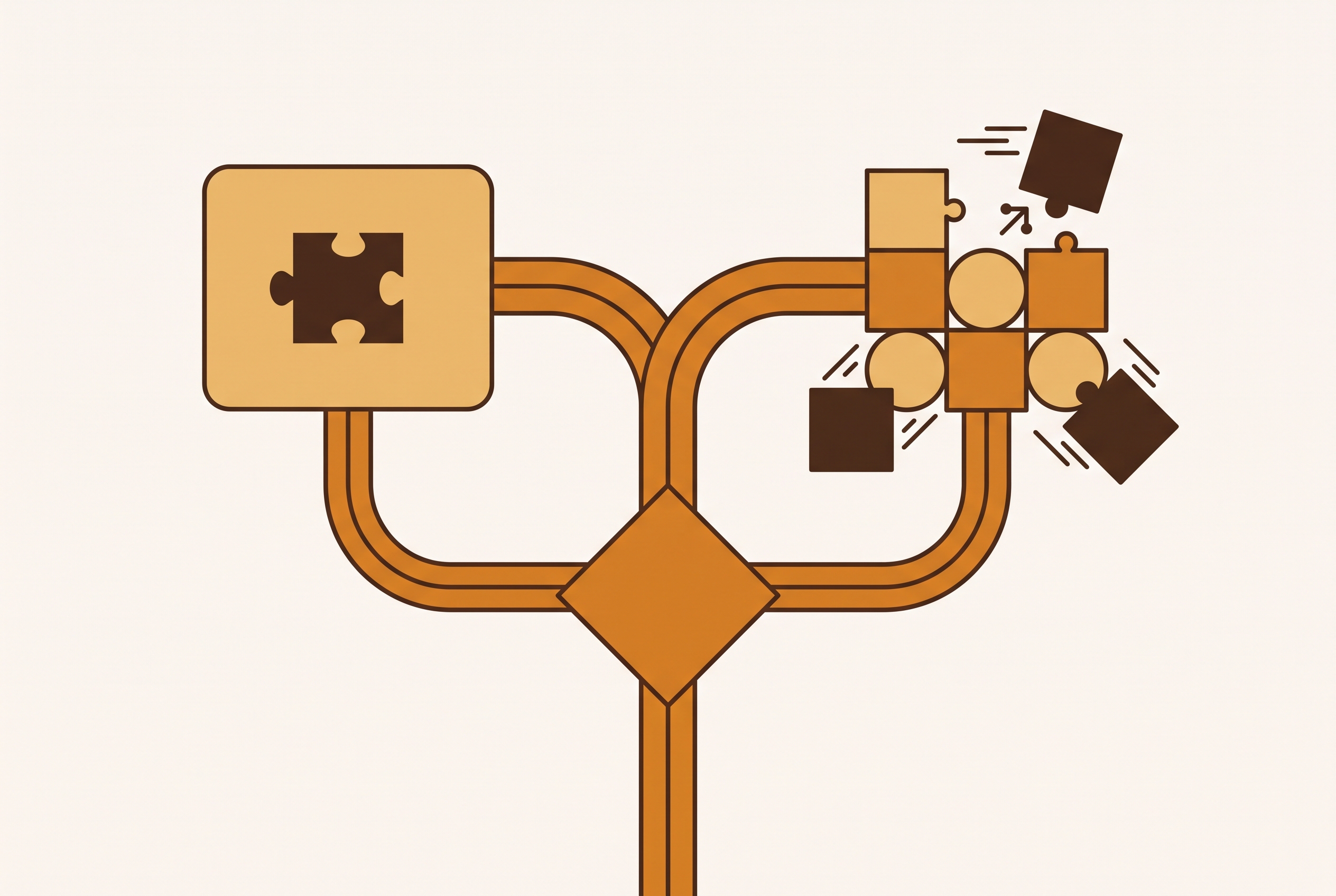
The engineering response is to make the model replaceable without rewriting the surrounding application. Keep enterprise knowledge in self-managed systems. Equinix says retrieval indexes, document collections, and business context should be kept in infrastructure the organization controls and out of the provider’s environment. Keeping that knowledge apart from the provider lets it stay intact when the provider changes. It also narrows the scope of what a model replacement must disturb.
Next, trace the application’s full dependency map. Identify the systems supplying context, the tools the application calls, the mechanisms enforcing access rules, and the information that would cross into a new environment. Equinix emphasizes that these paths determine the network traffic and latency effects of a provider change. The size of the document collection alone does not describe that exposure.
Use that map to distinguish relocation from replacement. Source data and business systems do not necessarily need to move when the inference model changes. But services managed by the provider may need to be built again or replaced. This distinction prevents a model switch from being treated as a wholesale infrastructure move when only part of the surrounding system depends on the outgoing provider.
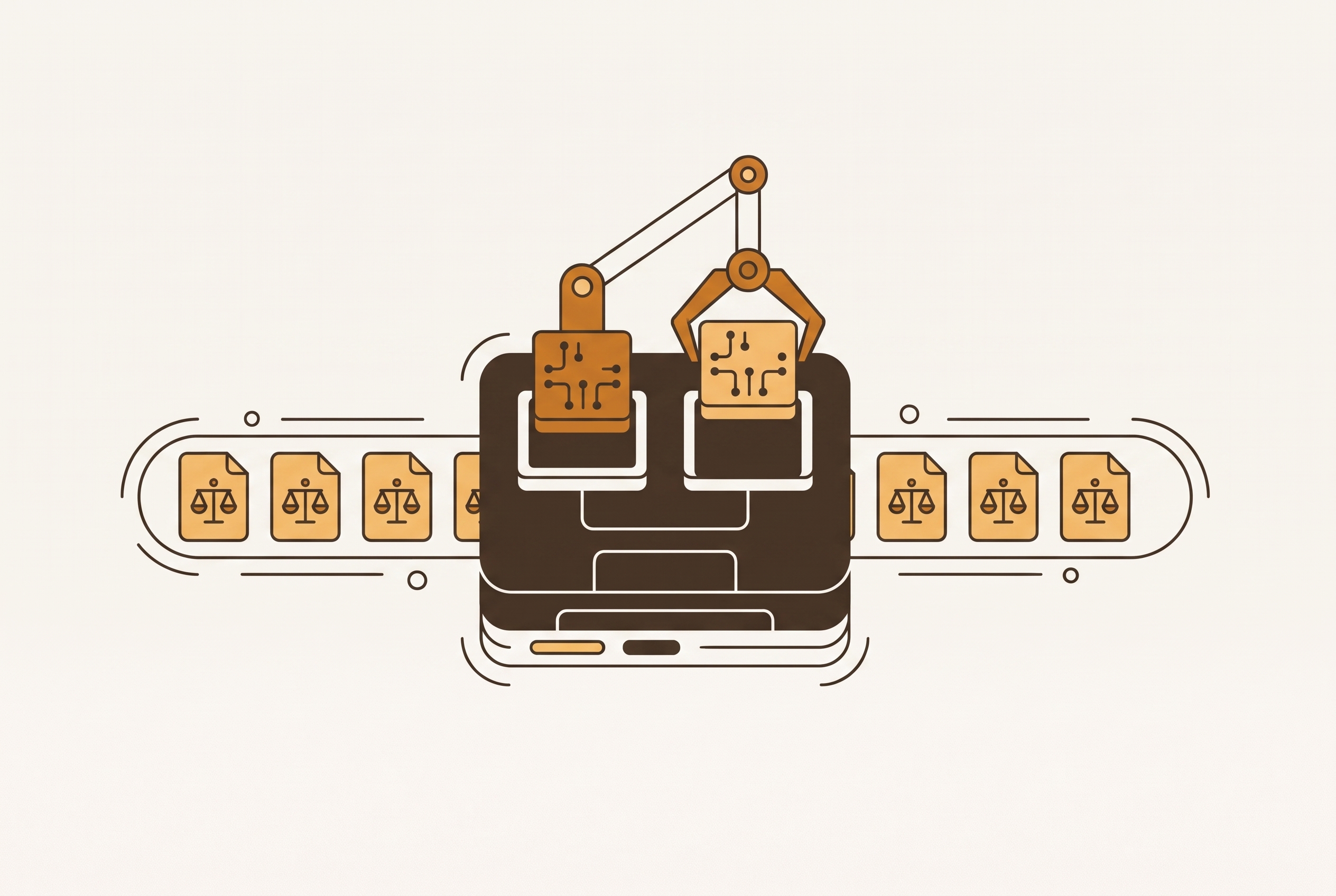
A model-agnostic abstraction layer supplies the application boundary. LiteLLM or a custom wrapper can allow the underlying model to change without changes to application code. The abstraction does not, however, establish that the replacement will behave correctly. Maintain a workflow-specific evaluation dataset to test instructions, tool use, and answer reliability. Changes to the prompt and retrieval pipeline can affect output quality more than the model swap itself, so the evaluation must cover those parts too.
Executing the migration in layers that preserve daily workflow continuity
Moving every workflow at once is the highest-risk approach, regardless of how well the system was built. The practical alternative is to proceed through dependency mapping, validation, and staged workflow migration. Each layer establishes the conditions needed for the next, rather than leaving unresolved dependencies to be discovered after cutover.
Begin by tracing every live connection before making changes. Include the context sources, tool integrations, access enforcement, and information that crosses provider boundaries with each request. Distinguish high-frequency, latency-sensitive workflows, such as a chat assistant sending short exchanges, from batch workflows moving large files. Their risk profiles require different sequencing decisions. Find the dependencies on procurement, finance, and sales at this stage so the teams can decide together how to migrate shared workflows.
Use a golden evaluation dataset drawn from real workflows to establish whether it follows application instructions, uses tools correctly, and produces reliable answers. Generic benchmarks do not establish those properties for a particular application. Schedule prompt rewrites where needed, and complete security and legal review before cutover. Validation is a condition of moving production work.
Then migrate workflows in order of their dependency risk. Begin where a self-managed retrieval index can supply context unchanged, because the surrounding system requires less alteration. Defer workflows relying on provider-managed conversation history or hosted retrieval until those services have been re-created and validated. Keep the outgoing model available in parallel for workflows not yet validated on the replacement. Cutting off that route turns a recoverable transition problem into an interruption without rollback.
Throughout the sequence, preserve the record of each configuration. Log model versions, prompt versions, and retrieval pipeline configurations at every stage. Those records let the organization show which model produced which output while the migration was under way. Continuity includes both the evidence of how work was performed and the availability of the workflow.
What an AI Operations Audit reveals before a migration begins
A pre-migration audit tests assumptions before they become commitments. Some of the most expensive mistakes originate months before cutover, when teams overestimate architectural separation and underestimate workflow interdependence. An AI Operations Audit should thus look at how the production system works today. The deployment project’s architecture diagram is not enough if live connections have accumulated since go-live.
The audit first establishes where dependencies and knowledge reside. It distinguishes institutional data held in provider-managed environments from assets in self-managed systems, then identifies the recovery or re-creation work a switch would require. It also separates workflows that can move independently from those requiring decisions across teams. This gives legal operations a basis for sequencing that reflects actual dependencies.
A golden dataset, prompt versioning, and model output logging must be sufficient to assess a replacement before production work moves. The audit should also check whether the logging and documentation already in place can keep an unbroken audit trail through the transition. Missing evidence is a governance gap, even where the application appears technically portable.
These findings make the migration estimate more concrete. The work needed to recover assets feeds into the TCO model, dependencies across teams shape the order of the move, and gaps in evaluation shape the schedule. An audit structured around production readiness can expose sources of disruption before the organization commits to switching.
The contractual provisions to address before signing any legal AI agreement
Architecture preserves technical flexibility, but the organization needs contractual rights to exercise it. Address export rights before signing or renewing. Require machine-readable, schema-documented exports in the contract so access to them does not depend on a later support request. The agreement should address both format and completeness, because access to a partial export leaves some assets unrecovered. In particular, the treatment of model training outputs must be understood before assuming institutional intelligence is portable.
Audit trail ownership also requires explicit treatment. Establish that model version logs, prompt logs, and output logs belong to the organization and are exportable on demand. Those rights support continuity of evidence during a switch and the documentation required for EU AI Act conformity. They should not depend on whether the outgoing provider remains part of the production system.
Bring TCO modeling into procurement rather than postponing it until deployment is complete. The gap between assumed and actual migration costs can be large enough to change the platform decision. Understanding that exposure before signing also changes the organization’s negotiating position. Export restrictions and recovery requirements become terms to resolve while there is still a choice, rather than constraints discovered after workflows depend on the platform.
The prompt, retrieval pipeline, contract terms, and dependency architecture together decide how much freedom the organization has to change the way it works. The practical objective is to preserve the knowledge, evidence, and daily workflows that must remain usable when the model chosen today is replaced.
Notes
- Ten AI Predictions for 2026: What Leading Analysts Say Legal Teams Should Expect
Provided context on the rapid growth of corporate legal AI adoption, including the claim that adoption more than doubled in a single year.