Essay Legal AI Platforms
RAG Applications for Legal Knowledge Retrieval
Fixing legal RAG requires respecting authority, tracking statutory change, and exposing provenance.
Retrieval-augmented generation (RAG) gives legal AI a practical foundation by grounding answers in current, citable documents without retraining the model. Its value in production, however, depends on more than retrieving relevant text. Reliable legal knowledge retrieval requires an architecture that respects legal authority, tracks statutory change, and exposes provenance, supported by governance that protects privileged information.
Why legal knowledge is structurally different from general enterprise knowledge
Legal knowledge is governed by hierarchical authority, continuous statutory change, and mandatory provenance. A regulation overrides a guideline, which in turn overrides an internal policy, so documents addressing the same subject do not have equal standing. Statutes, regulations, and case law also keep changing, which changes which passages can support a conclusion today. Every assertion must trace to a citable source with the authority and currency the question calls for.
A passage that was authoritative last quarter may have been superseded, while a current internal memo may describe a binding statute without having its legal weight. Similar wording does not establish equivalent authority. A system that retrieves both passages must tell their roles apart as well as recognize that they cover the same topic. Otherwise, the apparent relevance of the evidence conceals a defect in its legal standing.
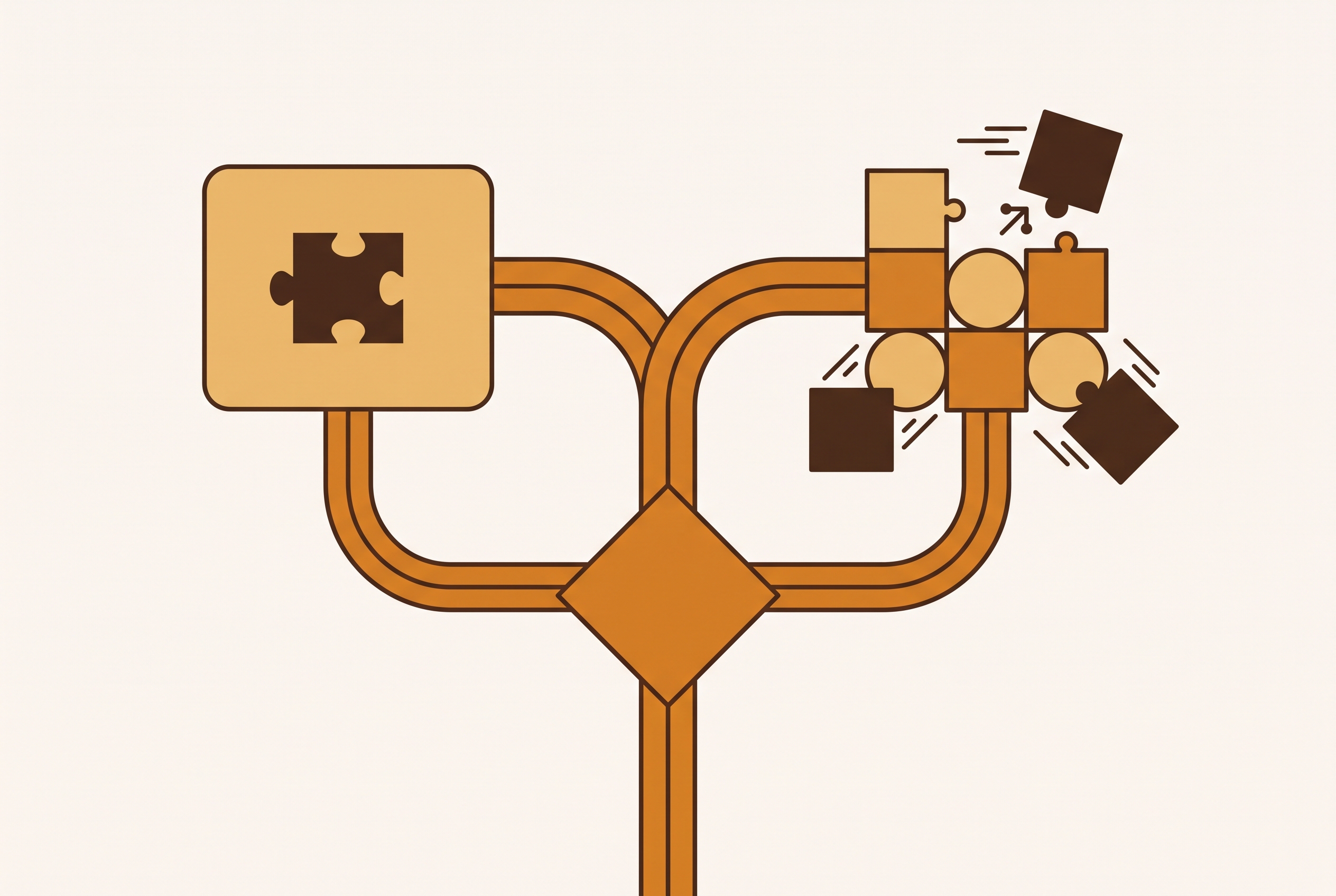
W-RAG’s authors identify a related structural flaw in the assumption that evidence from heterogeneous repositories can be ranked globally by one similarity function. Larger, denser, or more lexically aligned repositories can dominate that ranking and suppress smaller sources. In a legal corpus, the smaller source may be controlling. A niche regulatory provision can outrank a dense policy handbook in legal reasoning even when the handbook yields more similar passages. An AI system that cannot reflect this hierarchy and keep pace with legal change is not merely inaccurate but unusable in a professional context.
What RAG does that makes it the right starting architecture for legal retrieval
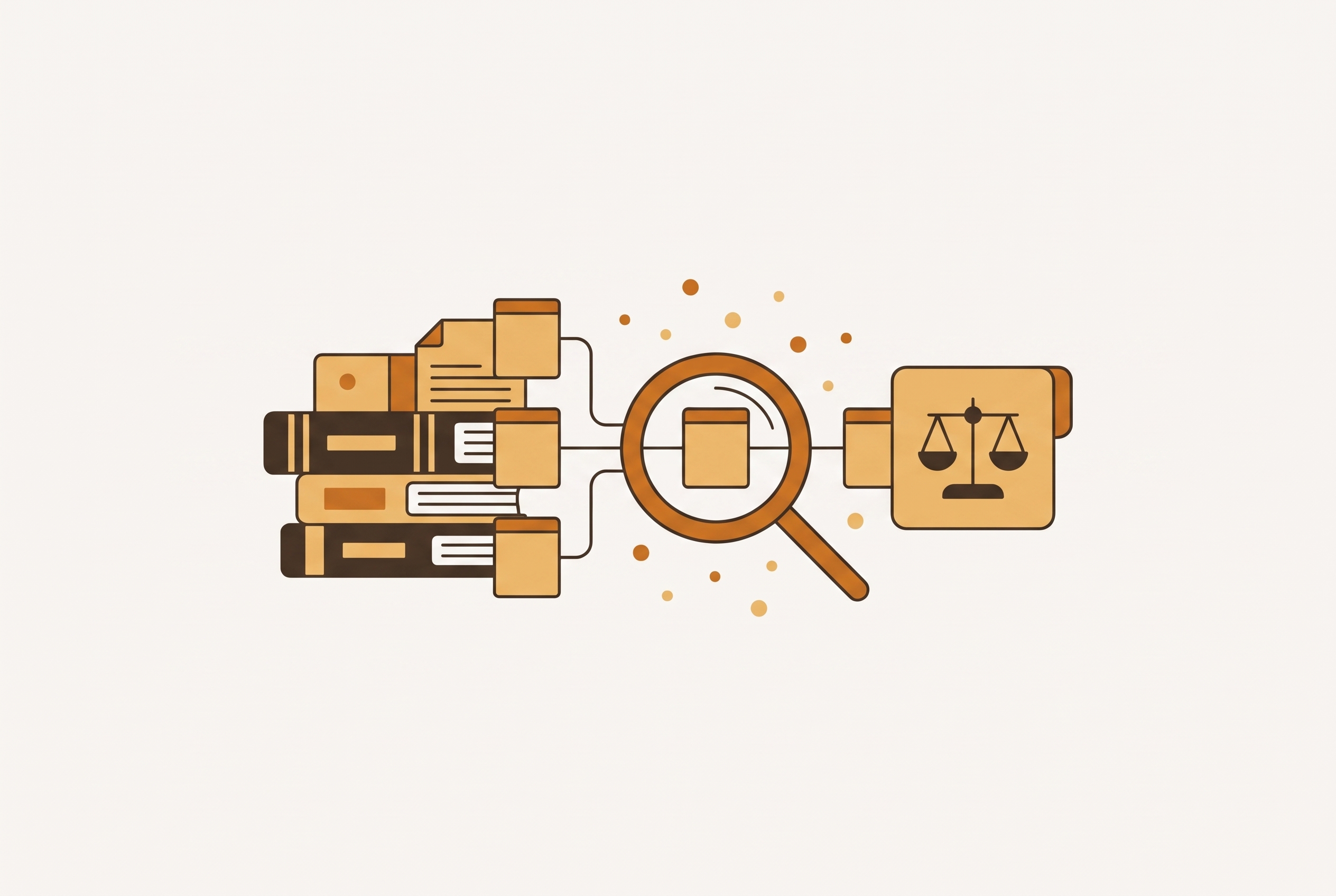
RAG separates the knowledge store from the language model. The model uses documents retrieved for the question to build an answer, drawing on them as well as what it learned during training. New statutes, amended regulations, and fresh case law can enter that store without retraining the model. This separation makes continuous updating operationally tractable. Retraining a bespoke model whenever the law changes is not an economically feasible alternative.
Gartner describes RAG as a pattern that makes enterprise data available for LLM processing and advises IT and data and analytics leaders adopting generative AI on corporate data to prioritize RAG investments. The knowledge needed for an answer resides in a maintainable corpus as well as in model parameters. The same foundation can bring together evidence from regulatory documents, contracts, and policy frameworks, even when it is spread across several repositories.
RAG also retrieves identifiable documents rather than supplying undifferentiated background knowledge. Each claim can point to the exact document behind it, giving legal and compliance professionals a basis for examining the evidence. Permission-aware retrieval can also limit what each user can access, keeping documents within confidentiality and need-to-know boundaries before they enter an answer. These properties make RAG the right starting architecture, but neither separation from the model nor access to citations guarantees that the right evidence will be selected or correctly applied.
How legal RAG breaks down when retrieval is naïve
A naïve legal RAG pipeline retrieves contextually similar text rather than authoritative text, without making the distinction explicit to the model. W-RAG’s research shows how a single global ranking can allow a dominant source family to crowd out other repositories. The resulting context is relevant but unbalanced. In compliance reports, policy creation, or M&A due diligence, the generated draft can therefore reflect the most prominent source family rather than the evidence composition the document requires. Retrieval succeeds at finding related passages while failing at assembling a sufficient legal basis.
Retrieval also leaves the model’s reasoning open to error. It supplies evidence of what sources say, but it does not validate how the model reasons from them. Hudson de Martim’s critique of legal RAG describes outputs that cite real documents while remaining anachronistic, structurally incomplete, or insufficiently grounded in legal institutions. A genuine citation is not enough on its own.
Researchers at UFCG found that RAG substantially improved factual accuracy and retrieval coverage in a large corpus of Brazilian legislative documents, but those gains depended on hybrid retrieval combining keyword extraction and semantic search. That finding supports adaptation of the architecture. Legal retrieval needs methods that address both the language of the query and the structure of the evidence. Hybrid search, source-aware composition, and explicit treatment of authority and time respond to different parts of that requirement.
A passage that was authoritative last quarter may have been superseded, while a current internal memo may describe a binding statute without having its legal weight.
The retrieval architecture legal RAG requires: hybrid search, source weighting, and hierarchical ranking
Hybrid search combines semantic retrieval with keyword retrieval. The semantic component addresses contextual similarity, while the keyword component gives explicit terms a separate route into the retrieved evidence. Neither establishes legal authority on its own. Their role is to improve the candidate evidence available for subsequent ranking, rather than to decide which source controls the answer. The Brazilian legislative research shows why access to legal documents can depend on that broader retrieval base.
Source-aware ranking then addresses the imbalance between repositories. W-RAG proposes ontology-guided topic modeling, local ranking within each knowledge base, and source-level weights that regulate how much context comes from each source. Local ranking precedes cross-source composition rather than allowing every passage to compete immediately in a single pool. For legal use, the weighting signal must reflect the hierarchy of statute, regulation, guidance, and internal policy. A binding regulation should not lose its place simply because an advisory guideline contains denser or more similar text.
Authority also needs a temporal dimension. Context-graph and ontology-driven RAG extend graph-based retrieval with operational metadata, lineage, temporal context, and governance policies, allowing retrieved provisions to be understood through their relationships and current or superseded status. These layers connect the passage to the conditions under which it can support an answer. W-RAG’s experiments show that source-aware retrieval improves document coverage and generation quality where standard pipelines struggle, but this result alone does not show that provenance governance or auditability is in place.
Why agentic RAG is the production pattern for large-scale legal knowledge systems
A single undifferentiated pipeline is poorly suited to honoring authority, checking currency, and composing evidence from heterogeneous sources at the same time. Agentic RAG separates those responsibilities among specialized agents that handle query decomposition, retrieval, validation, and synthesis, with work proceeding in parallel where appropriate. The orchestration layer brings their outputs together. Its purpose is not simply to increase throughput but to preserve the different tests that legal evidence must pass.
Role-based specialization makes those tests explicit. One agent retrieves evidence, a second checks whether a provision remains in force, and a third distinguishes controlling authority from advisory material. An orchestrator then composes the response with traceable provenance. Each role addresses a different structural risk. The currency check responds to continuous change, the authority check responds to hierarchy, and provenance links the composed answer to the evidence selected through those checks.
Self-reflective and corrective RAG add a further control by evaluating retrieved evidence and re-querying when it is weak. Weak evidence cannot simply pass through to generation. In legal settings, it can produce a claim with a real citation that does not actually support the conclusion. These patterns reduce hallucination risk, but their value depends on the checks they perform and the sources they can access.
Provenance and privilege: the two governance requirements that determine whether legal RAG is deployable
Retrieval quality cannot substitute for professional accountability or confidentiality. Before a legal RAG system is deployed, it must give every assertion traceable provenance and protect attorney-client privilege wherever privileged documents enter the corpus. These are independent conditions for professional use. An accurate answer can still be unusable if its basis cannot be examined, just as a well-supported answer can be unacceptable if producing it discloses confidential information.
Provenance must be visible to the legal professional. The system’s internal use of an identified source is not enough if the user cannot trace the claim and examine the reasoning against that source. Citing unverifiable material in a filing or compliance report creates professional liability. RAG makes claim-level citations possible, but the deployed system must show them to the user.
Using a public LLM API can waive attorney-client privilege if information is shared with the provider under terms that weaken confidentiality, including model training, data retention, or third-party disclosure. The risk depends on the arrangement. Options include private systems hosted in an isolated cloud network or on-premises systems that keep data in an environment the organization controls, as well as enterprise-tier APIs with explicit no-training data processing agreements.
Within that environment, permission-aware retrieval must apply access controls to the documents it selects for a user. A contractor or junior associate must not retrieve privileged communications from legal engagements on which they are not staffed. Protections for external confidentiality and limits on internal access guard against different ways information can be exposed, so controlled hosting still needs retrieval-level authorization.
What production deployment of legal RAG actually requires from an enterprise
Production readiness begins with the condition of the corpus. A legal RAG system is only as current and authoritative as the documents available to it, regardless of the sophistication of its agents. Ingestion pipelines must refresh and reindex changed content incrementally when statutes are amended or regulations updated. Without that process, the retrieval layer can serve stale law with the appearance of confidence and complete citations.
A named owner must be responsible for the quality of the corpus, the access control policy, and how exceptions are handled. Otherwise, maintaining the data and retrieval logic becomes an unassigned obligation. Ownership must be paired with production observability. The enterprise needs visibility into queries that trigger weak retrievals, responses that cite superseded provisions, and user segments accessing documents outside their authorization. These signals make failures available for correction rather than leaving them concealed behind fluent answers.
Relevant measures include cycle time on contract review, time spent on regulatory research, and error rates on compliance filings. Demo impressions are not an operational success criterion. A production-focused deployment partner should anchor the engagement to measurable ROI and build for scale across the organization. The surrounding infrastructure of data maintenance, governance, observability, and measurement often poses a greater deployment risk than agent quality. RAG delivers its architectural promise only when those operating disciplines keep its evidence current, its use authorized, and its claims open to scrutiny.
Notes
- W-RAG: Source-Aware Retrieval for Enterprise Document Generation from Heterogeneous Knowledge Bases
Provided the source-aware retrieval framework, including ontology-guided topic modeling and local ranking, used to explain how dominant repositories can crowd out smaller but controlling legal sources.
- Using Retrieval-Augmented Generation to Improve Access to Legal Documents
Provided the Brazilian legislative corpus research showing that hybrid retrieval combining keyword extraction and semantic search substantially improved factual accuracy and retrieval coverage.
- A Survey on Knowledge-Oriented Retrieval-Augmented Generation
Supplied the descriptions of context-graph and ontology-driven RAG with operational metadata, lineage, and temporal context used in the section on hierarchical ranking.
- Beyond Probabilistic Similarity: Structural, Temporal, and Causal Limitations of Retrieval-Augmented Generation in the Legal Domain
Provided Hudson de Martim's critique of legal RAG outputs that cite real documents while remaining anachronistic, structurally incomplete, or insufficiently grounded in legal institutions.
- LegalRAG: A Hybrid RAG System for Multilingual Legal Information Retrieval
Informed the discussion of hybrid RAG systems for multilingual and multi-repository legal retrieval, supporting points about combining semantic and keyword search in legal contexts.